
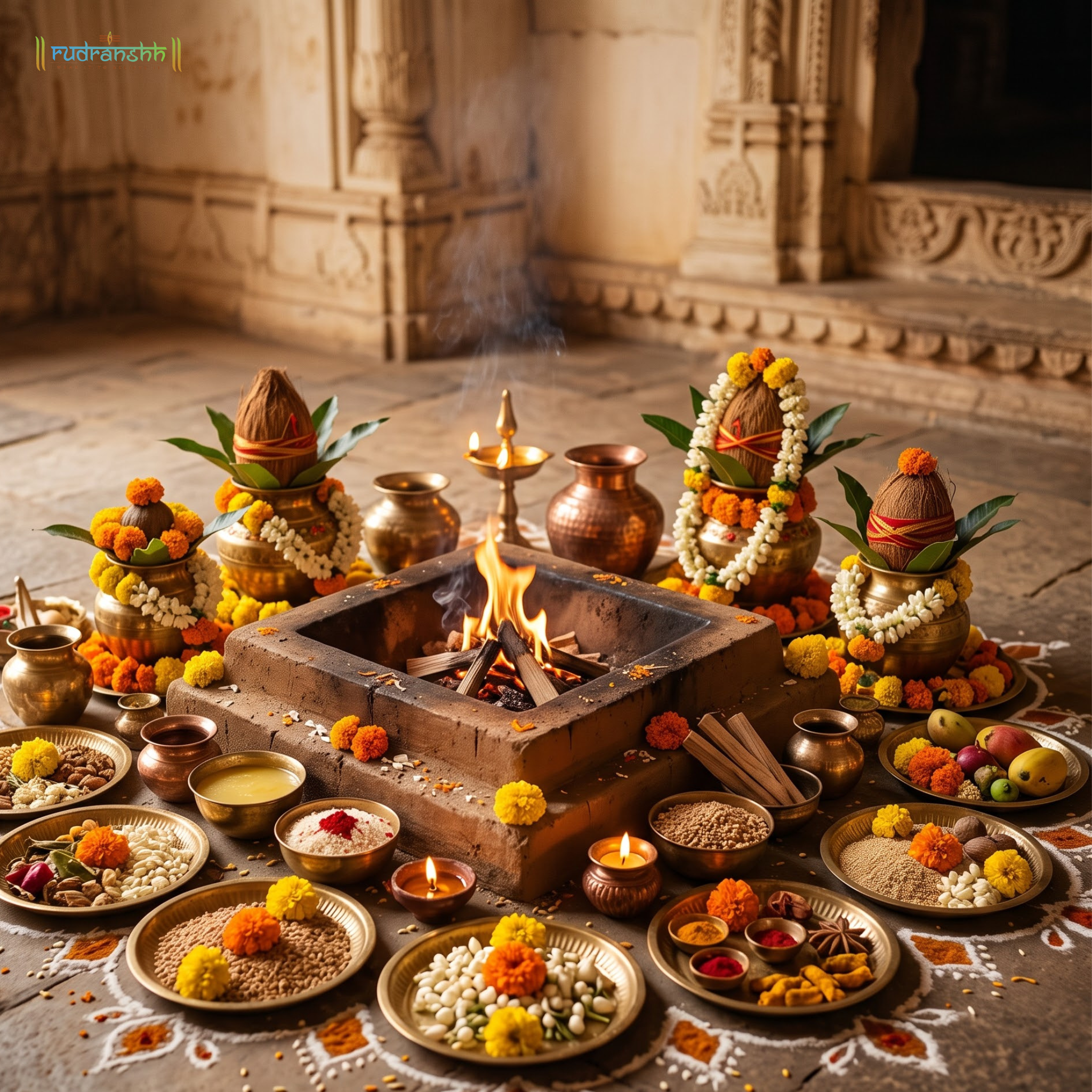
Grah Shanti Puja
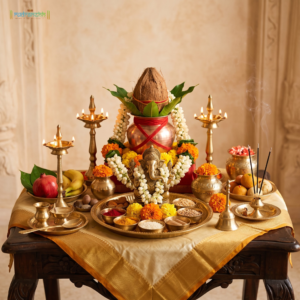
Grah Shanti Puja is a traditional Vedic puja performed with prayers, mantras and offerings dedicated to the Navagraha — the nine planetary forces.
It is traditionally performed to seek peace, balance, harmony and auspiciousness when planetary influences are considered challenging according to one’s birth chart or during significant phases of life.
Rudranshh provides personalised guidance so that the appropriate puja can be selected according to the devotee’s birth details, purpose and spiritual requirements.
Description
What is Grah Shanti Puja?
In Vedic tradition, the Navagraha comprise:
- Surya — Sun
- Chandra — Moon
- Mangal — Mars
- Budha — Mercury
- Guru — Jupiter
- Shukra — Venus
- Shani — Saturn
- Rahu
- Ketu
Navagraha worship traditionally seeks harmony with these planetary forces through mantra, puja, offerings and, where prescribed, homa/havan.
Grah Shanti Puja can therefore be understood as a spiritual practice intended to seek peace, balance and auspiciousness, particularly when a person or family believes they are experiencing difficult planetary influences.
Why Perform Grah Shanti Puja?
People traditionally consider Grah Shanti Puja for situations such as:
Challenging Planetary Periods
When a person’s Kundli/Dasha indicates an astrologically challenging period, a qualified Pandit or astrologer may recommend a suitable Grah Shanti ritual.
Repeated Obstacles
Some people seek this puja when they experience recurring difficulties in areas such as work, relationships, finances or general stability.
However, Rudranshh should never diagnose a problem from a generic symptom.
The correct flow should be:
Customer’s concern → Birth details → Panditji assessment → Appropriate Puja
Before Important Life Events
Navagraha-related worship is also traditionally performed around significant life events such as marriage, housewarming and other important beginnings.
Seeking Peace & Harmony
A person may simply wish to perform the puja as a devotional practice for greater peace, balance and auspiciousness.
Traditional Significance
| Attribute | Details |
|---|---|
| Puja | Grah Shanti Puja |
| Tradition | Vedic / Hindu |
| Primary Focus | Navagraha |
| Planets / Grahas | Surya, Chandra, Mangal, Budha, Guru, Shukra, Shani, Rahu & Ketu |
| Purpose | Peace, harmony, balance & auspiciousness |
| Recommended For | Based on individual requirement / Kundli |
| Duration | Panditji to define |
| Mantra Count | Panditji to define |
| Havan | According to selected package/vidhi |
| Online / Offline | According to Rudranshh service model |
Traditional Benefits
We should call these traditional purposes/associations, rather than guaranteed benefits.
Peace & Harmony
Navagraha worship is traditionally performed with the intention of bringing greater peace and harmony into one’s life.
Seeking Relief From Planetary Difficulties
When a qualified practitioner identifies challenging planetary influences, Grah Shanti may be recommended as a traditional spiritual remedy.
Auspiciousness
The puja is traditionally performed to seek favourable conditions and blessings before important events.
Spiritual Discipline
The ritual involves mantra, sankalp, offerings and devotional practice, creating a structured spiritual experience.
Mental & Emotional Reassurance
For devotees, completing a meaningful religious ritual can provide a sense of faith, devotion and inner reassurance.
Family Harmony
Grah Shanti Puja may also be performed on behalf of a family or household when the intention is collective peace and well-being.
Important: Rudranshh should not claim that Grah Shanti Puja medically cures diseases, guarantees financial success, removes every problem, or changes a person’s destiny. The page should clearly distinguish traditional belief from guaranteed outcomes.
Who Should Consider Grah Shanti Puja?
Grah Shanti Puja may be considered by:
- Individuals experiencing an astrologically difficult period
- Families seeking traditional planetary worship
- People beginning an important life phase
- People preparing for significant events
- Those advised to perform Navagraha Shanti by their Pandit/Astrologer
- Devotees seeking spiritual peace and auspiciousness
But this is where Rudranshh can become much better than competitors.
Don’t make customers diagnose themselves.
Instead:
Not sure which Puja you need?
Get Free Guidance From Panditji →
This should become a major CTA throughout the Pooja category.
What Information Do We Need?
For an online/personalised Grah Shanti Puja, the customer should ideally provide:
1. Full Name
Name of the person for whom the puja is being performed.
2. Date of Birth
Required when personalised astrological assessment is part of the service.
3. Time of Birth
Important for accurate Kundli-based guidance.
4. Place of Birth
Required alongside date and time for birth-chart calculation.
5. Gotra
If required by the Panditji/tradition.
6. Sankalp / Purpose
This is very important.
Instead of simply asking:
“What problem are you facing?”
ask:
What would you like to seek blessings for through this Puja?
Examples:
- Peace & harmony
- Career
- Business
- Marriage
- Family well-being
- New beginning
- General Grah Shanti
- Other
Current online puja providers similarly request name, DOB, birth place, birth time and sankalp.
Rudranshh Grah Shanti Experience
This should not feel like buying a normal eCommerce product.
The journey should be:
Step 1 — Choose Grah Shanti Puja
Customer understands what the puja is for.
↓
Step 2 — Share Birth Details
Name + DOB + Time + Place + Gotra where required.
↓
Step 3 — Panditji Guidance
Panditji reviews the requirement and determines the appropriate ritual approach.
↓
Step 4 — Select Puja Package
For example:
Essential
Complete
Personalised
Exact package structure should be defined by Rudranshh/Panditji.
↓
Step 5 — Choose Date / Muhurat
If the ritual requires a specific date or muhurat, that should be confirmed by Panditji. Current online providers similarly note that puja dates can depend on the type of puja or specific tithi.
↓
Step 6 — Puja Performed
Panditji performs the agreed ritual.
↓
Step 7 — Digital Proof / Experience
This is where Rudranshh can become premium:
- Puja confirmation
- Photos
- Short video
- Sankalp confirmation
- Prasad dispatch information
- Puja completion confirmation
↓
Step 8 — Prasad Delivery
If Rudranshh offers physical Prasad, show exactly what is included.
What Should Be Included?
Don’t invent this yet.
We need Panditji/Rudranshh operational confirmation for:
- Puja duration
- Number of Pandits
- Havan included?
- Puja Samagri
- Sankalp
- Prasad
- Photo/video
- Rudraksha
- Mauli
- Certificate
- Shipping
- Online live participation
Competitors commonly package combinations of puja, samagri and prasad, but Rudranshh should only list what we actually provide.
So WooCommerce fields should initially be:
Included → Actual Rudranshh Data
rather than fabricated promises.
How Grah Shanti Puja Works
A typical Vedic-style ritual may include elements such as:
Ganapati Puja
Beginning the ceremony with prayers to Lord Ganesha.
Sankalp
The devotee’s intention is formally stated.
Kalash / Devata Invocation
According to the specific ritual tradition.
Navagraha Puja
Prayers and offerings are made to the nine Grahas.
Mantra Japa
Relevant planetary mantras are recited.
Havan / Homam
Where prescribed, sacred fire offerings may form part of the ritual.
Aarti & Prasad
The ceremony concludes according to the selected tradition.
Exact Vidhi should be defined by Rudranshh’s Panditji.
We shouldn’t publish an artificial “13-step ritual” merely because another website does. Current providers vary considerably in their steps and duration.
Online Grah Shanti Puja
This should be a major selling point because customers may be located anywhere.
From Anywhere in the World
Rudranshh can potentially allow devotees to book their Grah Shanti Puja even when they cannot physically visit the temple or Panditji.
But we should clearly define whether Rudranshh offers:
Live Video Puja
or
Panditji Performs Puja on Customer’s Behalf
or
Both
Do not use generic “online puja” language until the actual service model is finalized.
What Customer Receives
This section should become a visual card system.
Before Puja
Booking Confirmation
↓
Panditji / Muhurat Confirmation
↓
During Puja
Puja Performed According to Selected Vidhi
↓
After Puja
Puja Completion Confirmation
Photos / Video — if included
Prasad — if included
Delivery Tracking — if applicable
This makes the service feel real and trustworthy, rather than “pay ₹X and something happens somewhere.”
FAQ
What is Grah Shanti Puja?
Grah Shanti Puja is a traditional Hindu/Vedic ritual performed to worship the Navagraha and seek peace, harmony and auspiciousness in relation to planetary influences.
Which planets are worshipped?
The Navagraha traditionally include:
Surya, Chandra, Mangal, Budha, Guru, Shukra, Shani, Rahu and Ketu.
Why is Grah Shanti Puja performed?
It may traditionally be performed when a person wishes to seek peace and balance during a challenging planetary period or before an important life event.
Do I need my birth details?
If Rudranshh provides personalised Kundli-based guidance, yes. We should collect:
Name + Date of Birth + Time of Birth + Place of Birth, and any additional information Panditji requires. Current online puja services use similar information for personalised sankalp and ritual planning.
Do I need to know which planet is causing the problem?
No.
This is an important Rudranshh UX decision.
The customer should not need to know:
“Mera Shani kharab hai.”
Instead:
Tell us your purpose. Our Panditji will guide you.
This dramatically reduces confusion.
Can I perform Grah Shanti Puja online?
If Rudranshh offers online puja, yes. The exact format—live or performed on the devotee’s behalf—should be clearly stated on the product page.
Can I choose the date?
The date may depend on the selected puja and the Panditji’s recommended muhurat. Some online puja providers specifically schedule ceremonies according to the ritual and relevant tithi.
Does Grah Shanti Puja guarantee success?
No.
It is a traditional spiritual practice. Rudranshh should never promise guaranteed financial, health, relationship or career outcomes.
Can I book this Puja for my family?
Yes, if the specific Rudranshh service supports family sankalp. The booking form should clearly ask for the person/persons included.
Reviews
There are no reviews yet.